Diabetic footwear is designed to protect feet that may have reduced feeling or poor blood flow. When diabetes affects the nerves or circulation, a shoe that rubs, pinches or presses may cause a blister or sore without causing much pain, and such wounds can heal slowly. Choosing shoes with the right fit, checking pressure points and inspecting your feet and shoes every day are simple steps that support safer walking. Insoles can help spread pressure, but they work alongside regular medical care and cannot replace it.
This guide explains what to look for in footwear and insoles, how to recognise pressure points and which safety checks to make part of your routine.
Why Footwear Matters in Diabetes
High blood sugar over a long period can damage nerves (neuropathy) and blood vessels. Reduced sensation means you may not feel a stone in the shoe, a tight strap or a small cut. Reduced circulation can slow healing. A minor problem can then become an ulcer or infection that needs medical treatment.
Our article on why footwear is important for diabetic feet explains these risks in more detail. Your doctor can tell you how much risk your feet carry, based on sensation, pulses, foot shape and any earlier ulcers.
What to Look for in Diabetic Footwear
A roomy toe box
Toes should be able to move without rubbing the sides or the upper part of the shoe. Pointed or narrow shoes can squeeze the toes and press on bunions, corns or hammer toes.
Correct length and width
Have both feet measured while standing, since one foot is often larger than the other. Fit the shoe to the larger foot. As a general guide, there should be about a thumb’s width of space between your longest toe and the end of the shoe.
Soft, seamless lining
Rough stitching or hard seams inside the shoe can cause blisters. Soft, smooth lining reduces friction on sensitive skin.
Supportive, cushioned sole
A firm, shock-absorbing sole with a slight rocker or flexible forefoot can reduce pressure under the ball of the foot. The shoe should not twist easily in the middle.
Adjustable closures
Laces or hook-and-loop straps let you adjust fit if your feet swell during the day.
Closed shoes
Closed-toe, closed-heel shoes protect your feet from injury. Be careful with slippers or open sandals, and avoid walking barefoot, even at home.
You can also read about diabetic foot shoes on our website.
Common Pressure Points
Pressure is the force that builds up when body weight is concentrated in a small area. Typical pressure points in the diabetic foot include:
- The ball of the foot, under the base of the toes
- The tips and upper surfaces of the toes, especially with claw or hammer toes
- The inner edge of the big toe joint (a bunion area)
- The heel
- The outer edge of the foot near the little toe
- Areas over bony prominences that rub against the shoe
Early signs include redness that does not fade after you remove the shoe, warm spots, calluses, corns, blisters and skin that looks shiny or dark. Calluses often form where pressure is highest, so a thick callus may be a hint that a part of the foot is overloaded.
How Insoles May Help
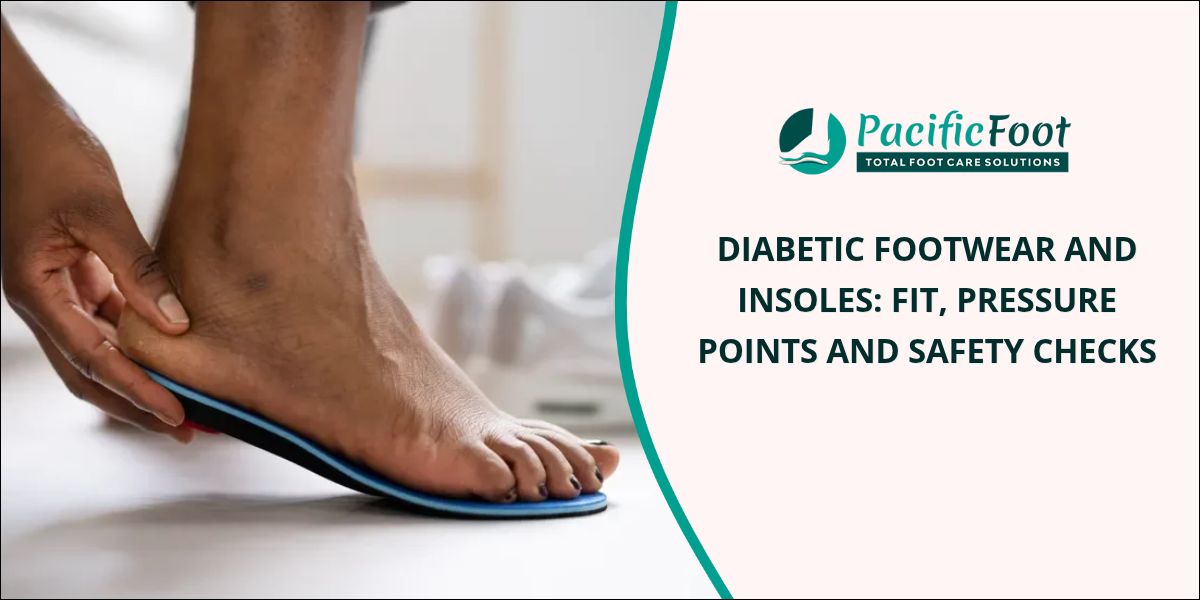
An insole sits inside the shoe and can be selected or made to match the shape of the foot. For a person with diabetes, insoles are usually used to:
- Cushion areas under higher pressure
- Spread weight over a wider area of the foot
- Support the arch and improve foot comfort
- Offload specific spots with careful contouring
Soft, cushioned materials and custom shapes are commonly considered for people with sensitive feet, but the choice depends on foot structure, shoe depth and the advice of your doctor. Insoles should fit within the shoe without crowding the toes, so you may need shoes with extra depth. At our centres, a foot assessment is part of the insole process. You can also read about our approach to diabetic foot patients.
Insoles do not treat diabetes, heal an ulcer on their own or ensure that foot problems will not occur. If you already have a wound, ulcer or infection, see your doctor first.
Daily Safety Checks
Check your feet
- Look at the upper surface, soles, heels and between the toes every day. Use a mirror or ask a family member if you cannot see the soles.
- Note cuts, blisters, redness, swelling, cracks, colour change or any new hard skin.
- Check the temperature of the skin with your hand, as warmth can signal inflammation.
Check your shoes
- Run your hand inside each shoe before wearing it to feel for stones, folds in the lining or rough seams.
- Look at the wear pattern on the soles. Uneven wear can suggest a gait or pressure problem.
- Replace shoes and insoles when they are worn out or flattened.
Check your socks
- Choose soft, seamless socks that fit well, without tight elastic bands.
- Change socks daily and keep your feet clean and dry, particularly between the toes.
Build good habits
- Try new shoes in the afternoon or evening, when feet are slightly bigger.
- Wear new footwear for short periods at first and check your feet afterwards.
- Do not use hot water bottles or heating pads on your feet.
- Do not cut corns or calluses yourself or use medicated corn plasters.
- Moisturise dry skin, but avoid putting cream between the toes.
When to See a Doctor
Seek medical advice promptly if you notice:
- A blister, cut, sore or ulcer that is not improving
- Redness, warmth, swelling or pus
- A change in foot colour, or a cold, pale or bluish foot
- New numbness, tingling or burning pain
- A change in foot shape or a newly painful bony area
- Fever or feeling unwell along with a foot wound
Regular foot checks by your doctor are important for everyone with diabetes, even when your feet look fine.
Frequently Asked Questions
Do I need special shoes if I have diabetes?
Not everyone does, but people with reduced sensation, deformities, poor circulation or earlier foot ulcers often need extra protection. Your doctor can tell you what level of footwear suits you.
Can insoles prevent diabetic foot ulcers?
Insoles may reduce pressure on certain areas, which can lower the strain on the skin. They are one part of foot care and cannot promise that an ulcer will not occur.
How often should I replace diabetic footwear and insoles?
It depends on use, materials and body weight. Replace them when you see compressed cushioning, worn soles or damage, or when your doctor advises.
Can I wear sandals or slippers at home?
It is safer to avoid walking barefoot. If you wear sandals or slippers, choose ones with a closed back and soft straps that do not rub, and check your feet regularly.
What if my feet swell during the day?
Choose adjustable shoes and try them on later in the day. If swelling is new or worsening, speak with your doctor.
Can I use ready-made insoles bought online?
Ready-made insoles may be suitable for some feet, but a poor fit can create new pressure points. A foot assessment and your doctor’s advice can help you choose.
Visit Pacific Foot Insoles in Pune
If you would like a foot assessment and a discussion about suitable footwear and insoles, you can visit one of our branches. Please bring your current shoes and any reports or advice from your doctor. For any wound, ulcer or infection, consult your doctor first.
-
- Branch 1 (Swargate): Flat No 203, 2nd Floor, Snehganga Building No B, Shankar Sheth Road, Next to Vega Centre, Pune 411037
- Branch 2 (PCMC): OPD No. 2, B303, 3rd floor, Gera Imperium Oasis, near PCMC Metro Station, Morewadi, Pimpri Colony, Pimpri-Chinchwad 411018
- Phone: +91 83297 40441
You can also use the contact page to send a message.